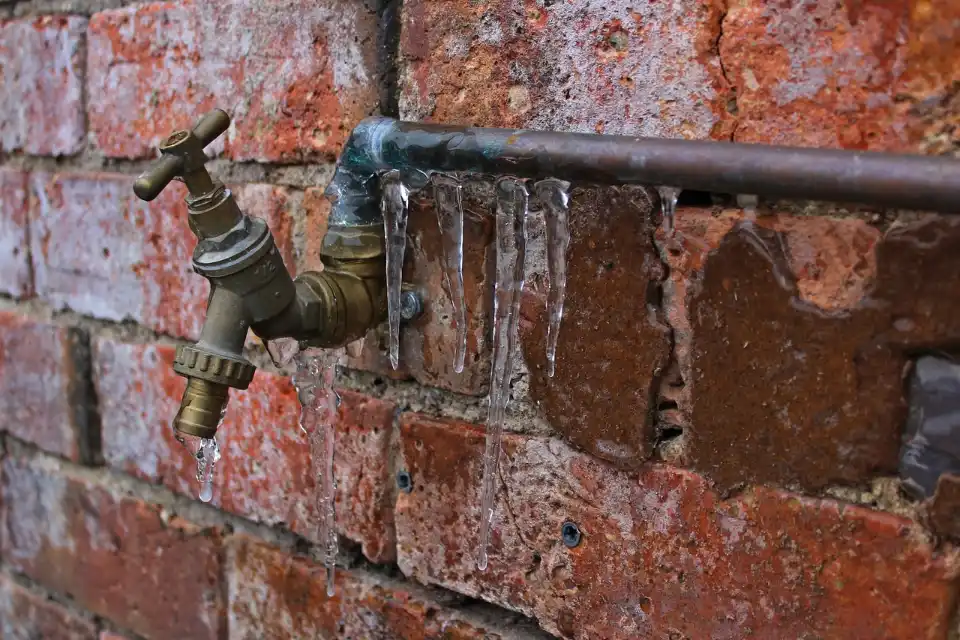
Why do pipes freeze in Eau Claire winters?
Pipes freeze when cold air reaches water sitting in a pipe for long enough. Eau Claire winters bring long stretches below freezing and nights below zero, which is hard on pipes in outside walls, crawl spaces, garages, and around basement windows. When the water freezes, it expands and can split the pipe.
What should I do in the fall to winterize my pipes?
Most of the work happens once, before the first hard freeze. Work through this list in October or early November.
- Disconnect garden hoses. A hose left on traps water in the faucet, which can freeze and crack the pipe inside the wall.
- Shut off and drain outdoor faucets. If a faucet has a shut-off valve inside the house, close it, then open the outdoor tap to let the water out.
- Insulate exposed pipes in crawl spaces, garages, and unheated basements with foam pipe sleeves.
- Seal drafts around pipes where they pass through outside walls, the rim joist, and basement windows.
- Find and test the main shut-off valve, so you can close it fast if a pipe splits. See how to find your main shut-off valve.
Want a plumber to check pipes in a cold spot before winter? Call (715) 800-0086.
What should I do on the coldest nights?
A few small habits help on the nights when the forecast drops well below zero.
- Open cabinet doors under sinks on outside walls so warm air reaches the pipes.
- Let a cold tap drip slowly on the faucets most at risk.
- Keep the thermostat steady day and night instead of setting it far back.
- Keep the garage door closed if water lines run through the garage.
What if I am going away in winter?
Leave the heat on, and do not let the home get cold while you are gone. Many plumbers suggest keeping the thermostat at 55°F or higher. For longer trips, shut off the main water valve and open a low tap to drain the lines, and ask someone to check on the home.
How can I tell if a pipe has frozen?
No water, or only a trickle, from a tap on a cold day is the most common sign. You may also see frost on a pipe or a bulge in it. Read what to do about a frozen pipe before you try anything.
What should I never do with a frozen pipe?
- Never use an open flame, like a torch, lighter, or candle. It can start a fire and can make the pipe burst.
- Do not use electrical devices near standing water.
- Do not hit the pipe to break the ice.
If a pipe has already split, shut off the main valve and see how to protect your floors and walls.
Pipe frozen right now? Call (715) 800-0086.
What else do people ask about winterizing pipes?
At what temperature do pipes freeze?
Water freezes at 32°F, but pipes inside a heated home usually freeze only when a cold snap reaches pipes in unheated spots, like outside walls, crawl spaces, and garages. Those pipes are most at risk on the coldest nights.
Should I let every faucet drip on cold nights?
No. Let a slow drip run from the faucets on outside walls or in the coldest rooms. Moving water is harder to freeze and it relieves pressure if ice starts to form.
Is heat tape safe to use on pipes?
It can be when used as directed. Choose a product listed for use on pipes, follow the maker’s instructions exactly, and never wrap it over itself. If you are unsure, ask a local plumber.
How do I winterize a home I will leave empty?
Keep the heat on at a steady setting, shut off the main water valve, and open the taps to drain the lines. Ask someone to check the home regularly. For a long absence, a plumber can drain and winterize the whole system.