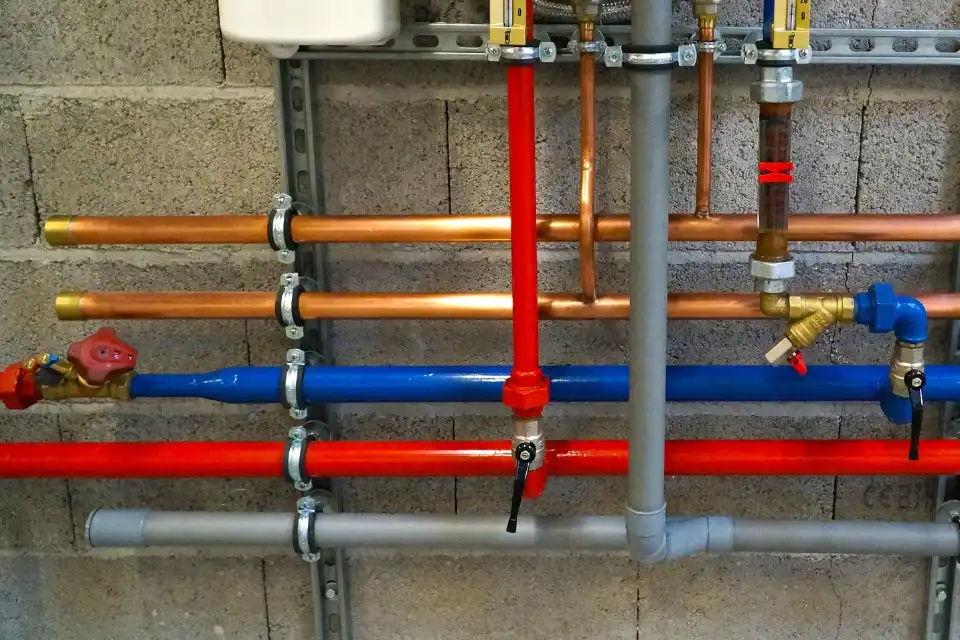
What does repiping mean?
Repiping is replacing old water supply pipes with new ones, either in one part of the house or throughout. It is usually done when the pipes are wearing out faster than they can be patched. A plumber looks at the pipe type, its condition, and how often it has failed before recommending it. It is the largest job covered in our guide to pipe repair in Eau Claire.
What kinds of pipes are found in older homes?
The pipe material tells you a lot about how much life is left in it. Many older homes have a mix, because sections were replaced over the years.
| Pipe type | How to spot it | What to watch for |
|---|---|---|
| Galvanized steel | Dull gray, threaded joints | Rust inside the pipe, low pressure, brown water |
| Copper | Orange-brown or green, soldered joints | Pinhole leaks, green crust at fittings |
| Polybutylene | Gray or blue plastic, often from the late 1970s to mid 1990s | Leaks at fittings and splits |
| Lead | Dull gray, soft, scratches to shiny silver | Most often the service line; contact your water utility |
| PEX | Red, blue, or white flexible plastic | Usually newer; check fittings near the heater |
Not sure what your pipes are? Call (715) 800-0086.
What are the signs it may be time to repipe?
- Leaks keep coming back in different places along the same pipe run.
- Brown or rusty water, especially first thing in the morning.
- Low pressure on more than one fixture that does not improve after cleaning aerators.
- Visible corrosion, flaking, or crust on exposed pipes and fittings.
- Old galvanized or polybutylene pipe still in use.
Should I repair or repipe?
A single leak on otherwise sound pipe can usually be repaired. When leaks are frequent, the pipe is corroded inside, or the material is known to fail, replacing it tends to make more sense than patching it again. The plumber can show you what they find so you can decide.
- Repair fits a one-off leak, a damaged section, or a failed fitting on healthy pipe.
- Partial repipe fits one run or one floor that keeps failing.
- Whole-home repipe fits pipe that is corroded throughout or made of a failure-prone material.
What happens during a repipe?
The plumber plans the new pipe routes, shuts off the water for sections of the work, runs the new pipe, connects the fixtures, and tests everything under pressure. Some wall or ceiling openings are usually needed. Ask the provider how they plan to handle access and patching. Read more about repiping and pipe replacement in Eau Claire.
What should I ask the plumber?
- What type of pipe do I have, and what condition is it in?
- Does a repair or a partial repipe make sense first?
- Which pipe material do you recommend, and why?
- How long will the water be off each day?
- What are your license and permit arrangements for this work?
If an old pipe is leaking now, see leaking pipe repair and signs of a hidden water leak.
Thinking about new pipes? Call (715) 800-0086.
What else do people ask?
How do I know what kind of pipes I have?
Look at the pipes near the water meter and water heater. Copper is orange-brown, galvanized steel is dull gray and threaded at the joints, and plastic PEX is usually red, blue, or white. A local plumber can confirm.
Do I have to repipe the whole house at once?
Not always. Some homes only need the worst section replaced. A plumber can tell you whether a partial repipe makes sense or whether the rest of the pipe is close behind.
Can I stay in my home while it is repiped?
Often, yes. The water is usually shut off for parts of the job. Ask the provider how they plan the work and how long the water will be off each day.
What if I think I have a lead service line?
Contact your water utility and ask whether your service line is listed as lead. Until it is replaced, run the cold tap for a short time before drinking and use cold water for cooking.
Will repiping fix low water pressure?
If the low pressure comes from old, narrowed pipes inside the home, new pipes usually help. If the problem is in the line from the street, that line may need work instead.